
How to Get Rid of Wasps & Hornets Safely
Finding a buzzing nest under your eaves, in the loft, or hidden in your garden hedge can quickly ruin an Essex summer. Wasps and hornets are protective, aggressive, and capable of delivering painful, repetitive stings.
If you are dealing with a few stragglers or a brand-new nest, here is how to handle the situation safely and when you should absolutely keep your distance.
3 Steps to Tackle Small Stinging Pest Problems
For tiny, early-stage nests (no larger than a golf ball) or general deterrence, you can try these straightforward DIY tactics:
Remove the Food Sources: Wasps love sugary treats and proteins. Keep your outdoor bins tightly sealed, clear fallen fruit from garden fruit trees, and never leave pet food outside.
Deploy Natural Repellents: Wasps and hornets detest strong, essential oils. Mix a few drops of peppermint, clove, and lemongrass oil with water in a spray bottle. Apply it around your patio ceilings, porch roofs, and windowsills.
Set Up Decoy Nests: These territorial insects generally won't build a nest within 20 feet of an existing one. Hanging a faux paper nest early in the spring can trick them into buzzing off somewhere else.
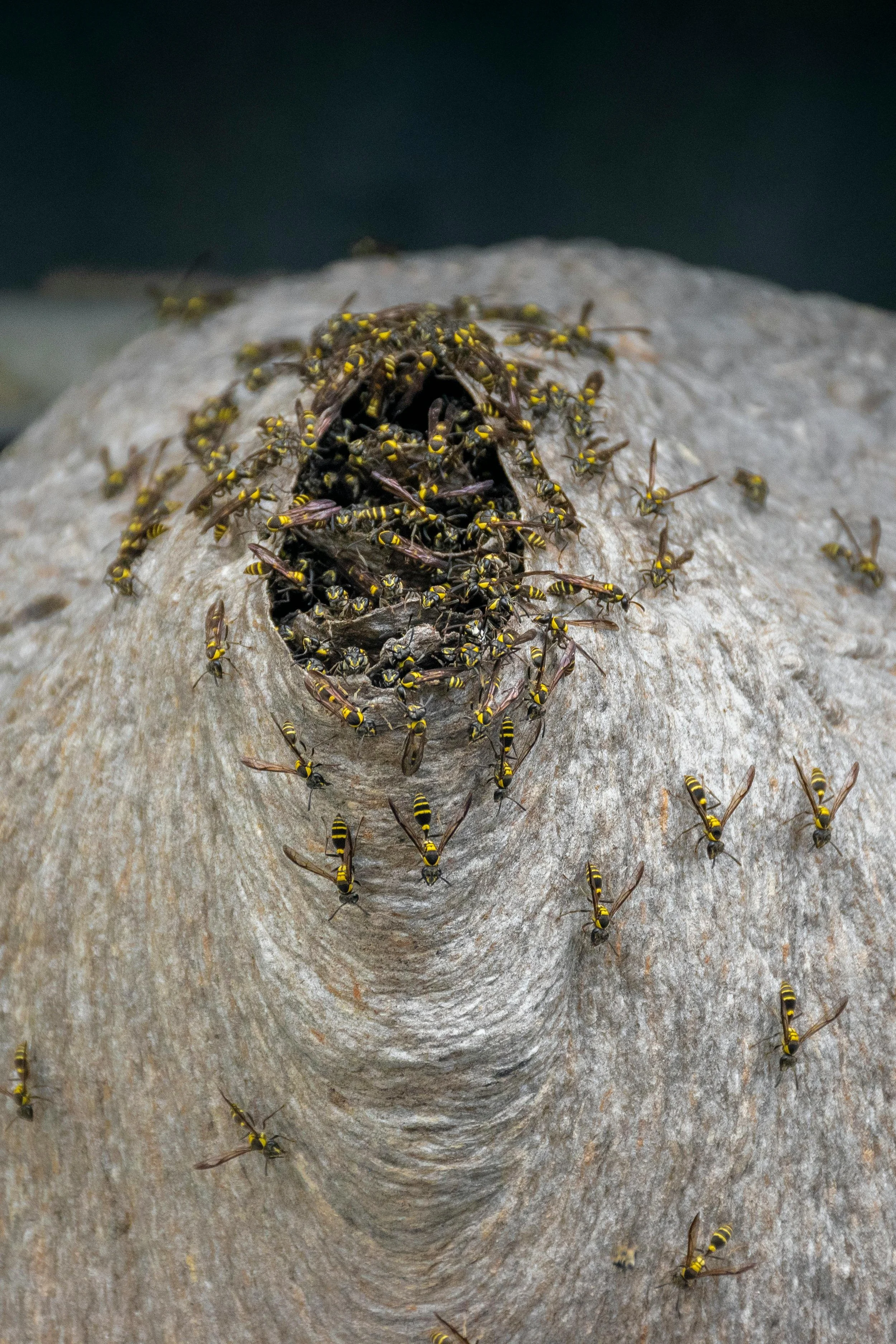
Hornets nest
When DIY Isn't Worth the Risk
-
If a nest has grown larger than a tennis ball, or if it is built inside an enclosed space like a loft cavity or wall void.
-
Standard supermarket freeze sprays or shop-bought powders often fail to penetrate the entire nest. Instead of solving the issue, they frequently agitate the colony, leading to swarm attacks that can put you, your family, and your neighbours in direct danger.
