Hornet vs Wasp vs Bee Identification Made Easy
We have had our first taste of summer sun, and with that comes BBQs, garden jobs, and more time outside. Then you notice a large flying insect near the shed, roofline, flower bed, or patio.
It is yellow and black. It is buzzing loudly. And before you go anywhere near it, you want to know what it is.
Most people cannot tell a wasp from a hornet on sight. That is where the usual hornet vs wasp confusion starts. Many people also mistake bumblebees for wasps, or call every striped insect a wasp.
The difference matters because the right action depends on what you are dealing with.
This guide gives you a simple answer. What each insect looks like, where it nests, and what to do if you find one in or around your home.
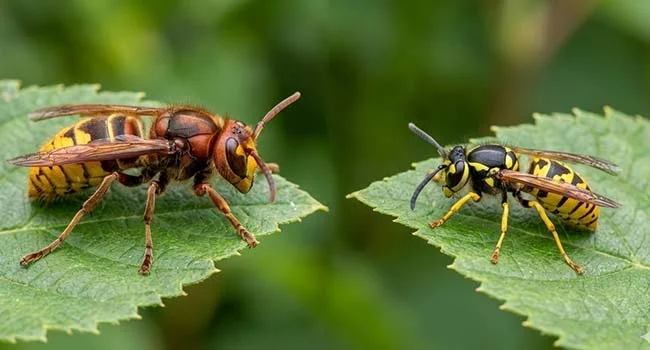
Quick Identification Guide
| Honeybee | Bumblebee | Common Wasp | Hornet | |
|---|---|---|---|---|
| Size | 12 to 15 mm | 15 to 25 mm | 12 to 17 mm | 18 to 35 mm |
| Body | Slim, tapered | Fat, round | Very slim waist | Thick, broad |
| Colour | Golden brown | Black and yellow with orange or white tail | Bright yellow, black bands | Brown red with yellow markings |
| Texture | Fuzzy | Very fluffy | Smooth, shiny | Smooth, shiny |
| Flight | Steady lines | Slow, hovering | Fast, erratic | Loud, powerful |
| Nest material | Wax comb | Moss and grass | Grey papier mache | Brown papier mache |
| Nest location | Wall, chimney, loft | Ground, compost, under shed | Loft, wall, tree | Tree, bush, wall cavity |
| Aggressive? | Rarely | Very rarely | Yes, especially late summer | If provoked near nest |
| Permanent nest? | Yes | No. Gone by Oct | No. New nest each year | No. New nest each year |
Still not sure? The most common confusion in the United Kingdom is hornet vs wasp.
Hornets are much larger, make a deeper buzzing sound, and are brown red rather than bright yellow. If it is bigger than a wasp and sounds heavy in flight, it is probably a hornet.
What are Honeybees like?
Honeybees are 12 to 15 mm long, golden-brown, and fuzzy. They fly in steady, purposeful lines. If you see a stream of small fuzzy insects all heading to and from the same gap in a wall or chimney, you may be looking at honeybees.
A honeybee nest is made of wax comb. Unlike wasps and hornets, honeybees do not abandon their nest at the end of the year. A colony inside a wall, chimney, or loft can grow over time and become harder to deal with.
Honeybees are not usually aggressive unless the nest is directly threatened. They are unlikely to sting just because you walk past. The issue is the nest itself. Wax comb can melt in summer, honey seeps through ceilings, and the mess attracts secondary pests.
Honeybee swarms are common in Essex and Suffolk from April to July. A swarm looks alarming but is actually the least aggressive a honeybee colony ever gets. If you see a large cluster of bees on a branch or fence post, leave it alone. Most swarms move on within 24 to 48 hours. If they do not, contact us and we will arrange relocation.

What are bumblebees like?
Bumblebees are hard to mistake once you know what to look for. They are large, fat, and very fluffy. Several common UK species have distinctive colouring: the buff-tailed bumblebee has a white or buff tail, the red-tailed bumblebee is almost entirely black with a bright orange-red tail, and the common carder bee is ginger-brown.
Bumblebees build small nests, usually in the ground, under garden sheds, in compost heaps, or occasionally in loft insulation. A colony peaks at around 200 to 400 bees. They are seasonal. The whole colony dies off by September or October, the queen overwinters alone, and the nest is never reused the following year.
Bumblebees are the least aggressive of the insects in this guide. They rarely sting unless you physically threaten the nest. For the vast majority of bumblebee nests in a garden or under a shed, the right action is to leave them alone and wait. They will be gone before winter.
The only time a bumblebee nest genuinely needs to be moved is if it is directly in the way of something unavoidable, such as right next to a doorway, children’s play area, or busy path.
What are common wasps like?
The common wasp is what most people picture when they think of a wasp. It is 12 to 17 mm long, with very bright yellow and black banding, a smooth shiny body, and a distinctively narrow waist. The flight is fast and erratic compared to bees.
Wasp nests are built from chewed wood pulp mixed with saliva, giving them a grey papier-mache appearance. They are built fresh every year. A new queen starts a nest alone in spring, the colony grows through summer, and by late September the nest is dying.
Wasps become more aggressive in August and September as the colony breaks down and food sources run low. This is when most wasp stings happen.
Wasp nests are often found in lofts, wall cavities, roof soffits, garden sheds, trees, and sometimes underground. If a nest is far away from people, it may not need treatment. If it is near a door, loft hatch, garden seating area, or children’s play space, professional treatment is usually the safer option.
Wasp nests in lofts are one of the most common summer call-outs across Colchester, Chelmsford, and Ipswich. Entry is usually through gaps in roof soffits or around fascia boards. If you hear an increase in wasp activity near the roofline in July, get it checked before the colony reaches peak size in August.
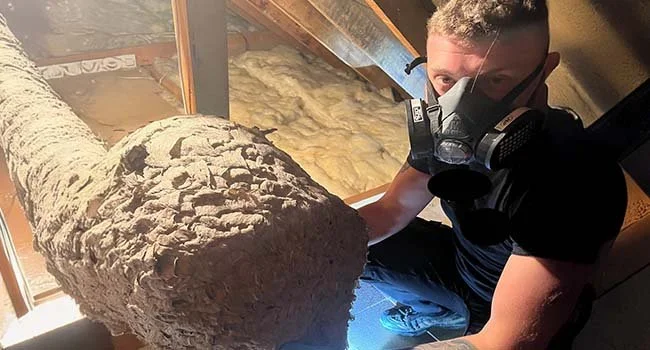
What are hornets like?
Hornets are often misunderstood. Many people think they are rare or exotic, but European hornets are found in parts of the United Kingdom, including Essex and Suffolk.
A hornet is significantly larger than a wasp. Workers are 18 to 25 mm long. Queens can reach 35 mm. The body is brown-red and yellow rather than the bright yellow of a common wasp. The flight is powerful and loud. If you hear a large buzzing insect that sounds like a small engine, you are probably listening to a hornet.
Hornets are not out to attack people. But they will defend their nest if they feel threatened. A hornet nest near a doorway, garden seating area, shed, or play area should be taken seriously.
The Median Wasp: The One Most People Have Never Heard Of
The median wasp deserves a mention because it regularly causes confusion. It is larger than the common wasp but smaller than a hornet, sitting at around 17 to 20 mm. It builds a distinctive open-comb nest that looks like a flattened grey disc, often hanging from a branch, fence post, or garage roof. Unlike the common wasp nest, which is enclosed, the median wasp nest has the comb cells visible.
Median wasps are usually less aggressive than common wasps, but they should still be left alone. If the nest is in a busy part of the garden, ask for advice from a pest controller before going near it.
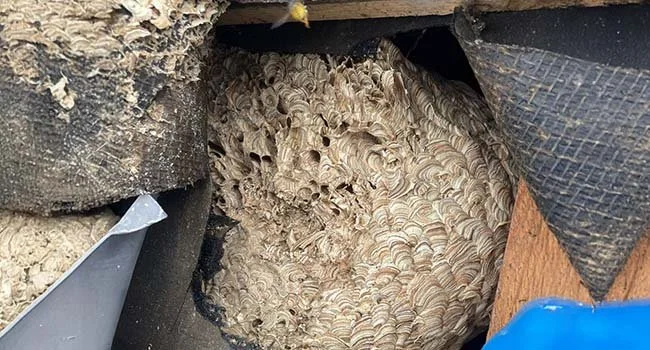
What to Do Once You Have Identified Whether Wasp vs Hornet vs Bee.
Bumblebee: Leave it alone. It will be gone by October. Only act if the nest is in a location that cannot be avoided.
Honeybee swarm: Leave it for 24 to 48 hours. Most swarms move on. If they stay, call us and we will arrange relocation.
Honeybee nest inside a building: Get professional advice. A nest inside a wall, chimney, or loft will grow year on year. The earlier it is dealt with, the simpler the job.
Common wasp nest: If it is away from footpaths and doors, it can often be left until the colony dies off in autumn. If it is inside the house or in a high-traffic area, professional treatment is the right call.
Hornet nest: Do not try to remove it yourself. Keep away from the nest and contact a pest controller. This matters even more if the nest is near a building entrance, seating area, or children’s play space.
Median wasp nest: Low risk if undisturbed. If it is in a regularly used part of the garden or garage, contact a pest controller for advice.
Common Questions
-
Yes. Hornets are a species within the wasp family. The European hornet is one of the species most commonly seen in the UK, including across Essex and Suffolk. The key practical differences are size, colour, and the louder flight noise.
-
Hornets are not always more aggressive than common wasps. But they are larger, so a sting delivers more venom. A hornet sting is more painful than a wasp sting and carries a higher risk for anyone with a venom allergy. A hornet nest near the house should always be treated by a professional.
-
The most likely options are a European hornet, a median wasp, or sometimes a harmless hoverfly. Hornets are larger and brown red. Median wasps are bigger than common wasps but smaller than hornets. Hoverflies can look like wasps but tend to hover in one place and do not sting.
-
Hornets usually nest in enclosed, sheltered places. This can include tree hollows, dense hedges, wall cavities, sheds, and sometimes loft spaces.
-
The nest material looks similar: papier-mache texture, built from chewed wood pulp. A hornet nest is generally larger, often brown rather than grey, and more commonly found in a tree hollow or wall cavity rather than a loft. The clearest way to tell them apart is to watch the insects using the entrance. A hornet is noticeably larger and brown-red rather than bright yellow.
-
It is not worth the risk. Nests can become defensive when disturbed, and DIY treatment often fails to reach the full nest. A hornet nest should not be treated without proper equipment and protective clothing.
Not Sure What You Are Looking At?
If you have spotted a nest or an insect you cannot identify, Beeyond Pest Control can help.
We cover Essex and Suffolk, including Colchester, Chelmsford, Ipswich, Braintree, Sudbury, and surrounding areas.