
Wasp Nest Removal
& Wasp Control in Essex & surrounding areas
Wasps and hornets are more than a nuisance. A sting is painful and can trigger serious allergic reactions. When a wasp nest is in your loft, wall or garden, the risk of being stung rises quickly, especially for children, pets or anyone working nearby.
Trying to deal with a wasp nest yourself is risky, especially when it is high up or hidden in a wall cavity or roof space. Beeyond Pest Control provides safe, professional nest removal across Essex. We locate and treat wasp and hornet nests in lofts, roofs, cavity walls, sheds, air bricks and gardens, then give clear advice on how to prevent new nests.
Our focus is safe, fast removal so you can get back to using your home or business with confidence. We often help customers in Essex and surrounding areas such as Colchester, Braintree, Chelmsford, and Southend. Call us on 0800 246 5224 for a professional wasp removal.
How our wasp nest removal service works
-

Inspection and nest location
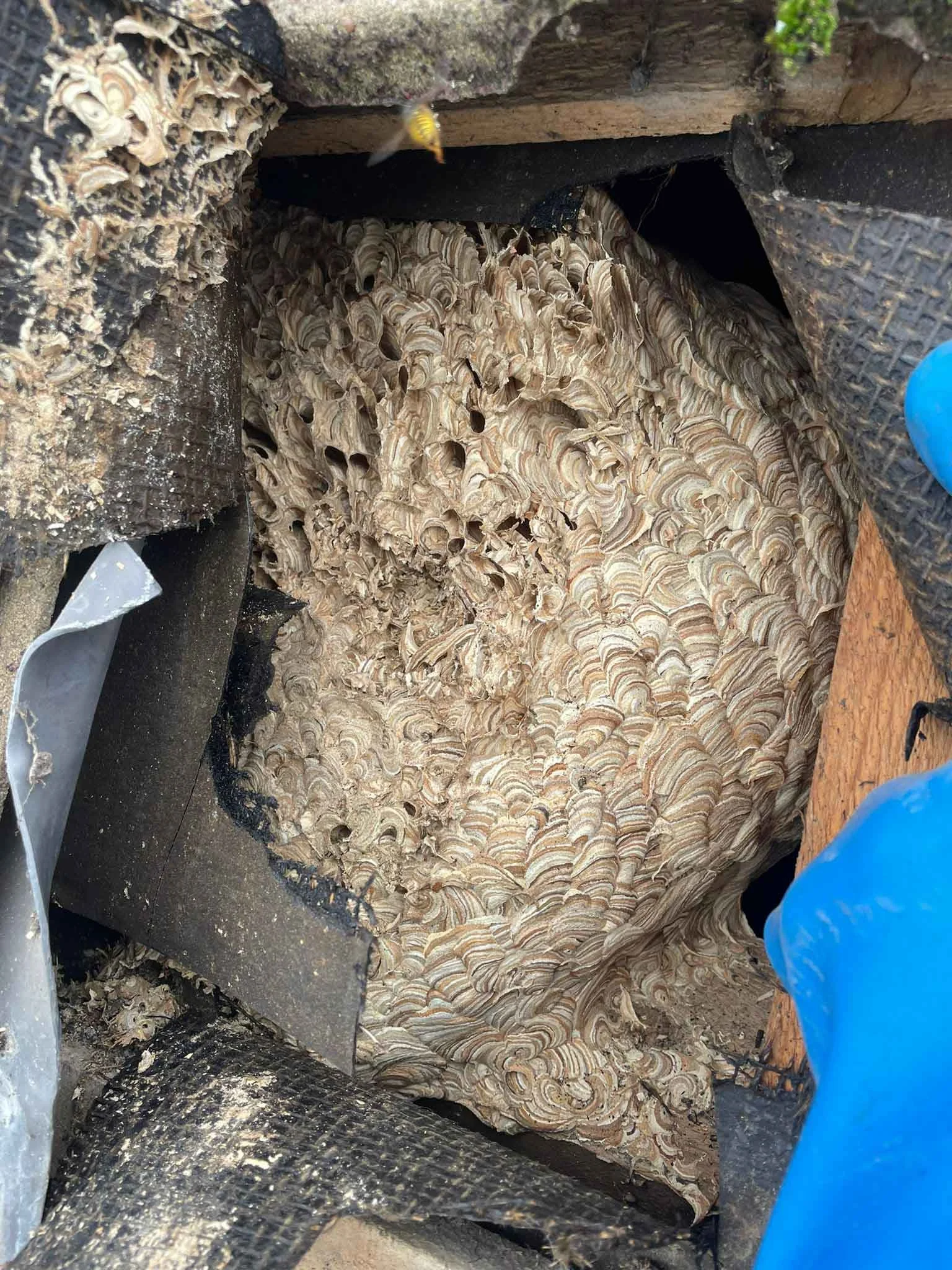
We start with a visual check of the property to find where wasps or hornets are nesting and how they are getting in. This might be a wasp nest in an exterior wall, a loft, an air brick, a roof void or a bush in the garden. We look for flight lines, entry holes and signs of a hidden wasp nest so we can plan the safest way to treat it. You will be told what we have found and what type of wasp or hornet is involved.
-
Professional treatment and nest removal
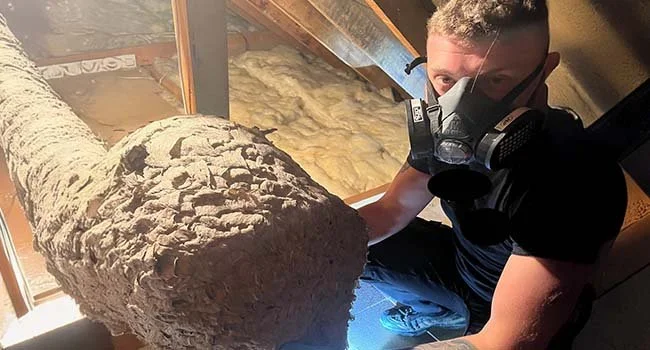
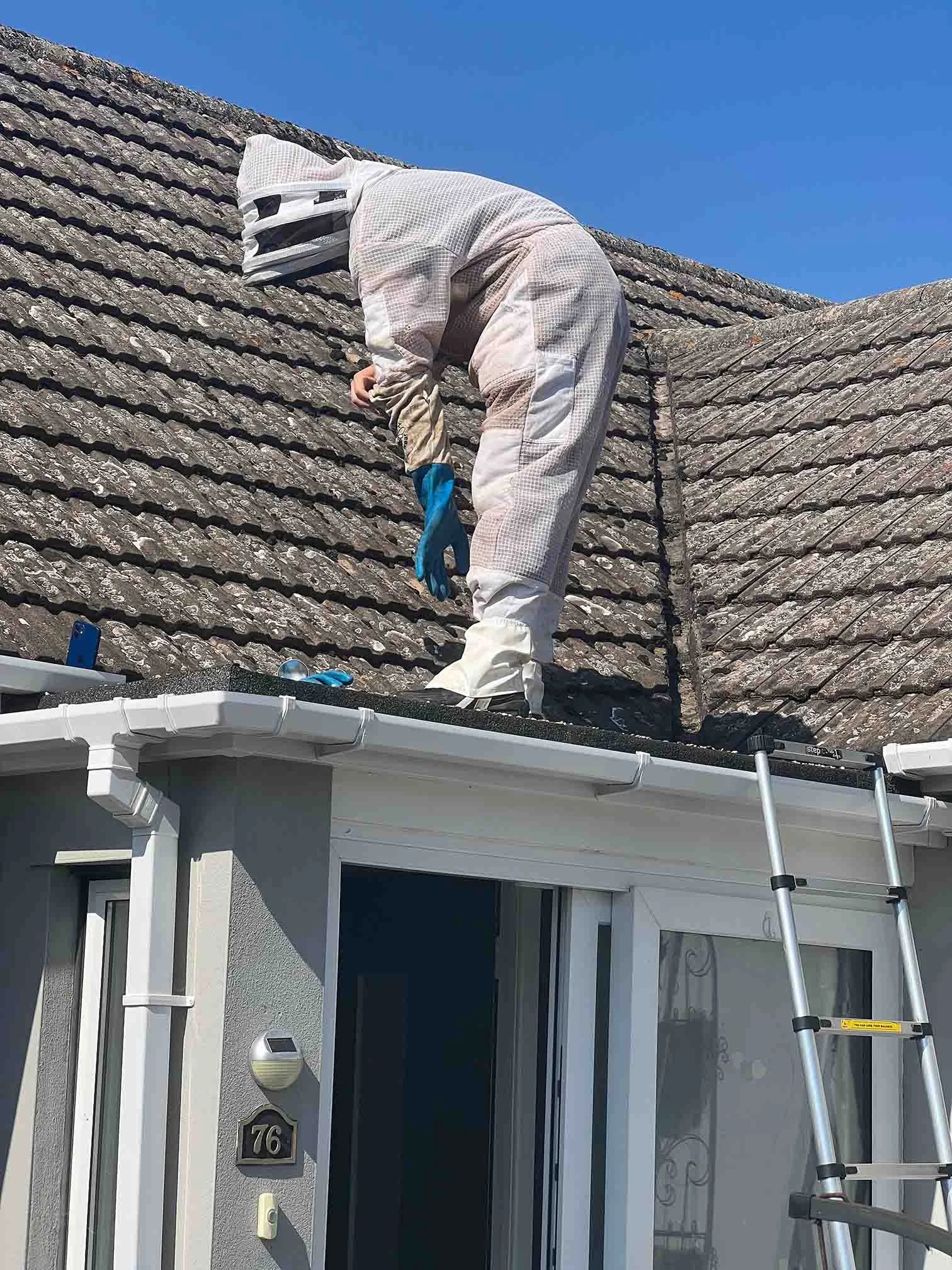
Once we identify the nest, we use specialist wasp control products and application equipment to treat it. This may be a targeted insecticidal powder, spray or foam, depending on the location. Our technicians wear the correct protective clothing and follow current safety guidance so you do not have to go near the wasp nest yourself. In most cases a single treatment kills the nest within a few hours and activity around the nest entrance drops away.
-
Safety checks and prevention advice
After treatment, we check activity levels and make sure it is safe for you to use the area again. Old nests are usually left in place once treated, as they will not be reused, but we can advise on removal where needed, for example in lofts. You will also receive simple prevention tips on reducing food sources, sealing gaps and spotting early signs of a new wasp nest so problems can be dealt with quickly next time.
Common wasp and hornet nest locations in Essex
We see a wide range of nest sites in homes and commercial properties.
Where safe and practical, we can remove the dead nest after treatment, for example small nests in sheds or reachable loft areas. Nests in walls or sealed cavities are usually left in place, as they will not be reused.
Typical wasp nest removal jobs include:
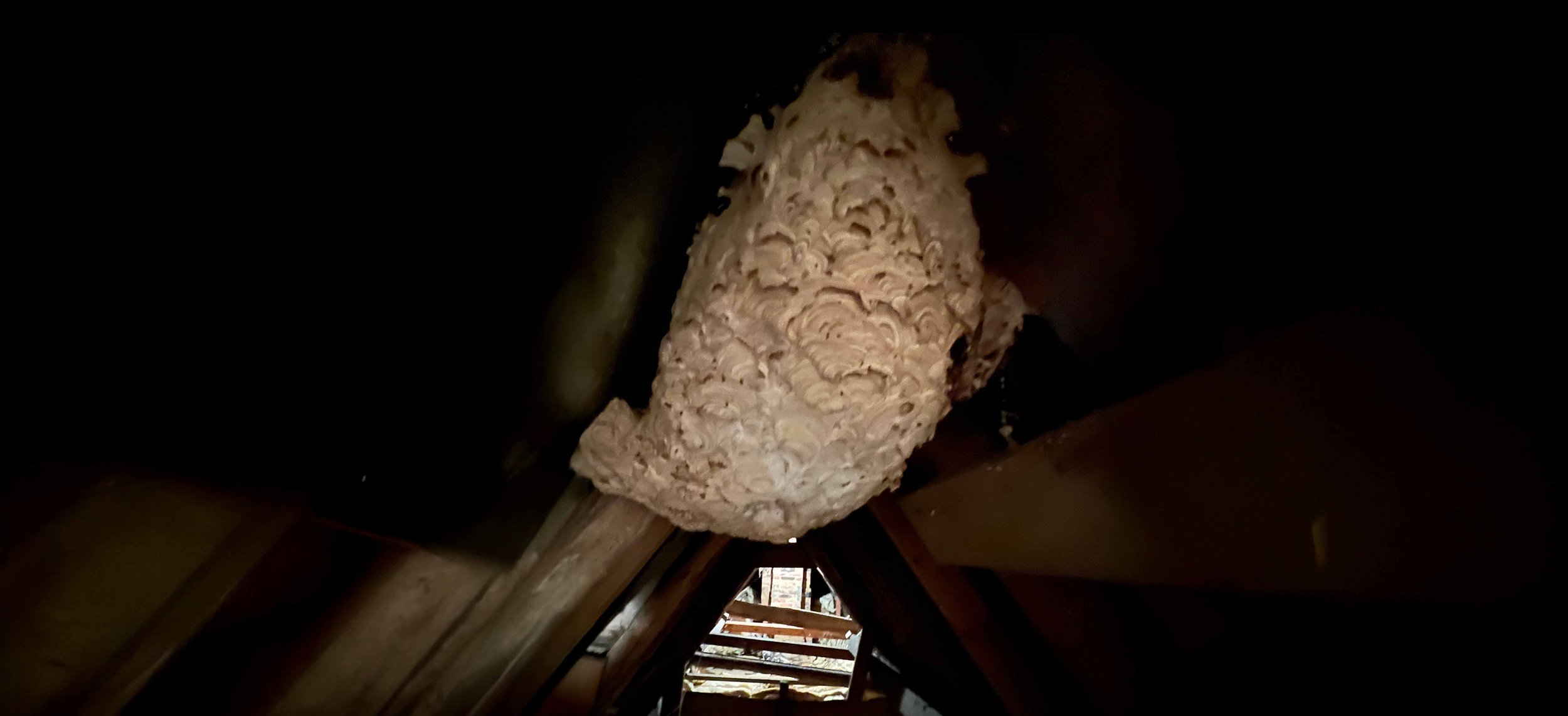
Wasp nests in lofts and attics - Hidden behind insulation, water tanks or rafters, with wasps using small gaps in tiles, soffits or vents as entry points.
Nests in wall cavities and air bricks - Wasps entering through air bricks, cracks or gaps around pipes, then building nests in the cavity.
Nests in sheds, garages and roof spaces - Paper nests attached to rafters, beams or ceiling panels, often spotted when you open a door in summer.
Ground wasp nests in lawns and borders - Nests in old rodent holes or soil banks, where wasps fly in and out of a small hole in the ground.
Hornet nests in trees and buildings - Larger insects with powerful stings. Hornet nests are treated with the same care, using methods suited to their size and height.
Signs you may need wasp nest removal
You might not see the wasp nest itself at first. Signs that suggest you need wasp nest removal in Essex include:
Regular wasps flying in and out of a single point on the house, such as an air brick, soffit or roof tile
A steady stream of wasps around a hole in the lawn, flower bed or base of a tree
Increased wasp activity in one room, often near a ceiling light, chimney breast or loft hatch
Loud buzzing or rustling in the loft or wall cavity, especially on warm days
Visible grey or brown papery nest structures in sheds, garages or loft spaces
If you notice any of these, it is safer to arrange a professional wasp control visit rather than trying to block the entrance or spray over the nest yourself. How to get rid of wasps? We handle it for you.
Wasp nest removal FAQs:
-
DIY wasp nest removal using sprays and powders from shops can help with very small exposed nests, but they can also make wasps more aggressive if used incorrectly. Loft spaces, roof edges and wall cavities are especially risky. Professional wasp nest removal avoids unnecessary stings and uses products that are stronger than those available to the general public.
-
The cost of wasp nest removal in Essex depends on where the nest is located, how high it is and whether access equipment is needed. Simple nests at ground level or in a shed are quicker than nests above conservatories or in difficult roof lines. Once we know the details, we give a clear fixed price before any work starts, so you know exactly what your wasp nest removal will cost.
-
After treatment, you should see a big reduction in activity within a few hours. Some wasps that were out foraging may return for a day or so, but they will not be able to rebuild the nest once the queen and core colony are gone. We explain what to expect on the day, and when it is safe to use the area again.
Where a nest has caused damage or contamination, for example in a loft, we can discuss further cleaning or proofing as part of a wider pest control plan.
-
In the UK, wasp nests are not reused. The colony dies off in late autumn, and new queens hibernate elsewhere ready to start fresh nests in spring. You may see nests in the loft from previous years, but they are inactive. If you have regular nests in the same area, it usually means there are gaps or sheltered spots that wasps find attractive, which we can help you identify and proof.
-
Yes. Hornets are part of the wasp family and their nests are treated in a similar way, although extra care is taken due to their size and sting. We can assess any hornet nest removal needed and advise on the safest approach for you and your neighbours.
Another service we offer is live honey bee removal.
-
Beeyond Pest Control is based in Braintree and covers homes and businesses across much of Essex, including areas around Colchester, Chelmsford, Maldon, Sudbury, Halstead and surrounding villages. If you are unsure whether your property is in range, give us a call on 0800 246 5224 or fill in the contact form and we will confirm if we can attend or recommend the best next step.