What to Do If You Find a Bee Nest in Your Wall Chimney or Loft
Finding a bee nest at home can feel alarming. You open the loft hatch and hear buzzing. Or you notice a steady stream of insects flying in and out of a gap near the chimney. Maybe you can hear them inside the wall, but you cannot see where they are coming from.
The good news is this. If you find a bee nest, do not panic. In many cases, bees are calm unless disturbed. Do not block the entrance, spray chemicals, or try to remove the nest yourself. The safest next step is to identify the insect, check where it is nesting, and decide whether the nest should be left alone, relocated, or professionally removed.
This guide explains what to look for, what type of insect you may be dealing with, and what to do next.
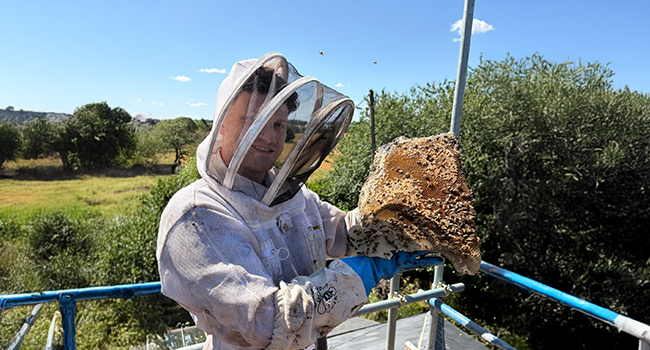
Quick Answers About Finding a Bee Nest
People often search for bees nest, how to get rid of bees nest, or bees nest in loft what to do because they want to know if it is dangerous and what to do next. Here are the answers people search for most.
What should I do if I find a bee nest?
Keep children and pets away. Do not block the entrance or spray it. Watch the flight path from a safe distance and get the nest identified before taking any action.
Is a bees nest dangerous?
A bees nest becomes a problem if it is close to children, pets, or busy parts of the home. Bees are rarely aggressive unless the nest is disturbed.
How do I get rid of a bees nest safely?
The safest route for how to get rid of bees nest is not DIY. Get an identification first. Many cases need no treatment at all; only honey bee nests inside buildings need urgent professional attention.
What if the nest is in a wall, chimney, or loft?
A bees nest inside wall, bee nest in chimney, or bees nest in loft should be left undisturbed until it is assessed. Do not block entry points or apply sprays.
Will bees return after removal?
Yes, if entry points are not sealed. A new swarm will be attracted to the scent of the old nest. Good bee nest removal should also address the entry point, so the same spot is less likely to attract a new swarm later.What to Do First When You Find a Bee Nest
A bee nest should always be assessed before anyone tries to remove it. The following steps apply, no matter the location of the nest.
Keep children and pets away from the area
Do not touch, spray, smoke, or block the nest entrance
Watch the flight path from a safe distance to find where bees are entering
Take a photo if you can do so safely as it helps with identification
Is It a Honey Bee, Bumblebee or Wasp?
Not every bee nest is the same. Knowing what insect you have changes everything about how to deal with it. A lot of people use the term bees nest when the insects are actually wasps. Others assume every large fuzzy insect is a bumblebee. That is why proper identification matters.
| Honey Bee | Bumblebee | Wasp | |
|---|---|---|---|
| Size | Small to medium | Large and round | Medium, slim waist |
| Appearance | Golden brown, fuzzy | Fluffy, banded | Shiny, bright yellow |
| Nest material | Wax comb | Moss and grass | Grey papier-mâché |
| Colony size | Up to 60,000 | Up to 400 | Up to 10,000 |
| Nest permanent? | Yes. Grows every year | No. Dies off in autumn | No. Built fresh each year |
| Typical action | Professional removal or relocation | Leave alone until autumn | Professional treatment |
Essentially, a honey bee nest needs professional attention, and the earlier it is dealt with, the smaller the job is likely to be. A bumblebee nest does not need to be disturbed at all. Leave it alone and it will be gone by October. Wasps are more aggressive than bees, especially in late summer, and a wasp nest near a doorway or play area usually needs professional treatment.
Do You Actually Need to Remove a Bees Nest?
This is the most important question, and the honest answer is: often, no.
A bees nest that is not near children, pets, or building entry points can usually be left alone. That is often true with bumblebees, especially if the nest is seasonal and not causing a problem.
Honey bee nests are different. They are permanent. A honey bee colony inside a wall or chimney can remain in place and grow over time if it is not dealt with properly. Wax comb and honey can cause structural damage, attract wax moths, and become a much messier removal the longer it is left. For honey bees inside the building, early professional advice is always worth getting.
Ask yourself these questions:
Are the bees causing a direct hazard near children, pets, or a door used every day?
Is the nest inside the building structure - a chimney, wall cavity, or loft?
Has anyone in the household been stung or do they have a bee venom allergy?
Is the nest growing larger and more active each week?
If you answered yes to any of those, contact a pest controller who specialises in bee nest removal.
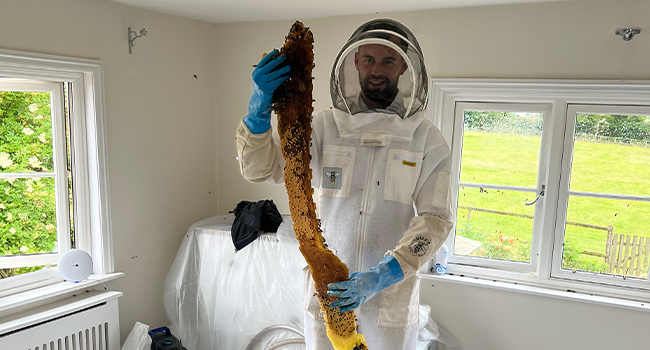
Bees Nest Inside Wall: What to Do
A bees nest inside wall is a common hidden nesting problem. Bees may use cracks in brickwork, mortar gaps, air bricks, or spaces around window frames. You might also hear a faint hum behind plasterboard on warm days.
Signs of a bees nest inside wall include:
Bees entering and exiting through a single gap in the mortar or brickwork
A low, constant hum from inside the wall, especially in warm weather
Bees appearing inside near light switches, skirting boards, or wall sockets
Honey or damp staining seeping through plaster or paint
Do not fill the hole. Blocking the entrance can trap bees inside and push them into living areas. If honey bees are nesting in the wall, the colony, comb, and honey may all need dealing with properly. Sprays into the entry hole rarely solve the problem.
Bee Nest in Chimney: What to Do
A bee nest in chimney spaces is more common than most people expect. Chimneys are warm, sheltered, and largely undisturbed. This is exactly what honey bees look for in a permanent nest site. A bee nest in chimney areas can stay hidden for months, growing deeper into the flue before it is noticed.
Signs of a bee nest in chimney spaces:
A steady stream of bees entering and leaving near the chimney pot or stack
Buzzing sounds near the fireplace, especially in warm weather
Bees appearing inside the room near the fireplace surround
A sweet or waxy smell coming from the chimney
If you suspect a bee nest in chimney voids, stop using that fireplace. Do not light a fire to drive the bees out. Heat and smoke distress the colony and can push bees further into the building. Melting wax comb deep inside the flue can also create a fire hazard and a structural blockage.
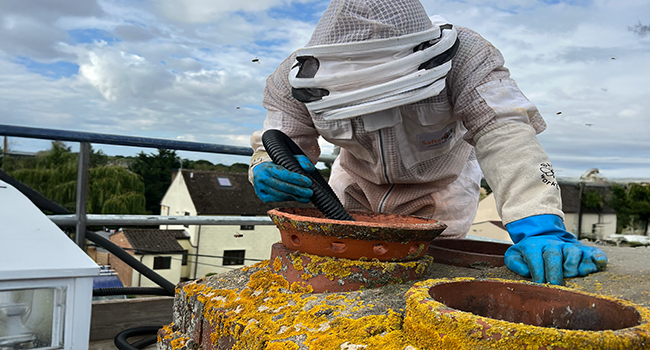
For a bee nest in chimney locations, a pest controller can apply a targeted treatment directly to the colony. In accessible cases, a local beekeeper may be able to extract the swarm. Once the colony is dealt with, the chimney should be capped professionally to prevent a new swarm returning.
Bees Nest in Loft: What to Do
If you are searching “bees nest in loft what to do?”, stay calm, stay out of the loft unless you have to enter, and do not disturb the nest area.
A bees nest in loft spaces is one of the most common call-outs for Beeyond Pest Control across Essex and Suffolk. Lofts offer warmth, shelter, and a dark, undisturbed space. Honey bees enter through gaps around soffits, roof tiles, or where cables pass through the eaves. Many homeowners only realise there is a bees nest in loft spaces when bee activity increases in spring and summer.
Signs of a bees nest in loft:
A constant stream of bees entering and leaving through a gap near the roofline or fascia
Buzzing sounds above the ceiling, especially in warm weather
Bees appearing inside the house through light fittings or ceiling gaps
A sweet or sticky smell coming from the loft space (often a sign of honey bees)
Staining, wax debris, or honeycomb visible on loft timbers
Do not use insect killer, expanding foam, or DIY removal. A loft can hide a large honey bee colony, and disturbing it can make the problem worse. The right steps are to reduce disturbance, confirm the species, and get professional advice before taking action.
Bee nest removal from a loft also means sealing the entry points. Without this, a new swarm will return to the same spot the following year, drawn by the scent of the old nest.
How to Get Rid of a Bees Nest Safely: Your Options
Leave It Alone
For bumblebee nests in a garden, under a shed, or in a quiet corner of the loft, this is often the right answer. The nest will be gone by October. Bumblebees are valuable pollinators and pose almost no threat unless the nest is physically disturbed.
Relocate the Colony
If it is a honey bee swarm or an accessible nest, relocation may be possible with a beekeeper.
Arrange professional removal
When a bee nest is inside a building, professional pest control is the most reliable route. This may include removing nest material, relocating the colony where possible, and sealing the entry point to reduce the chance of bees returning.
Bee Nest Removal Across Essex and Suffolk
If you have found a bee nest in your loft, chimney, wall, or garden and are not sure what to do next, Beeyond Pest Control can help.
We cover Colchester, Chelmsford, Ipswich, Braintree, Sudbury, and surrounding areas across Essex and Suffolk. We will tell you honestly whether the nest needs professional treatment, relocation, or whether it is best left alone. Get in touch today to arrange a survey.